Irrigated agriculture in Spain is a subsector of agricultural activity of great importance, generating approximately 71% of the Final Plant Production, using approximately 22% of the cultivated area.
The transformation of dryland into irrigated land has a long tradition in Spain, although it was during the 19th century, and especially in the 20th, that the State intervened decisively, making the transformation of irrigated land a fundamental part of agricultural policy.
Irrigation policy continues to be a fundamental axis within rural development policies, both for its contribution to the fight against depopulation and the generation of employment and added value in rural areas, and for its essential role in supplying healthy, safe, quality food at reasonable prices.
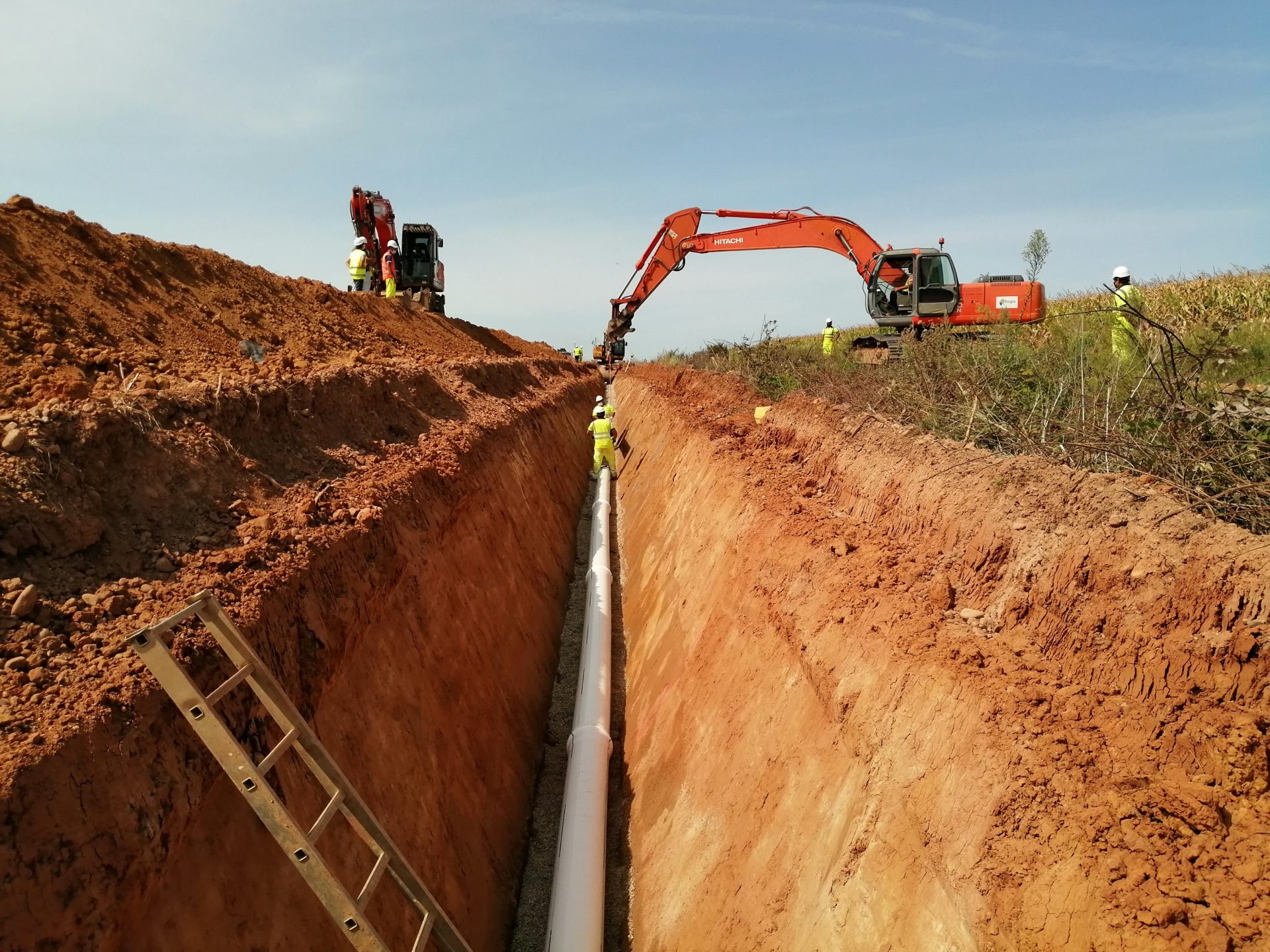
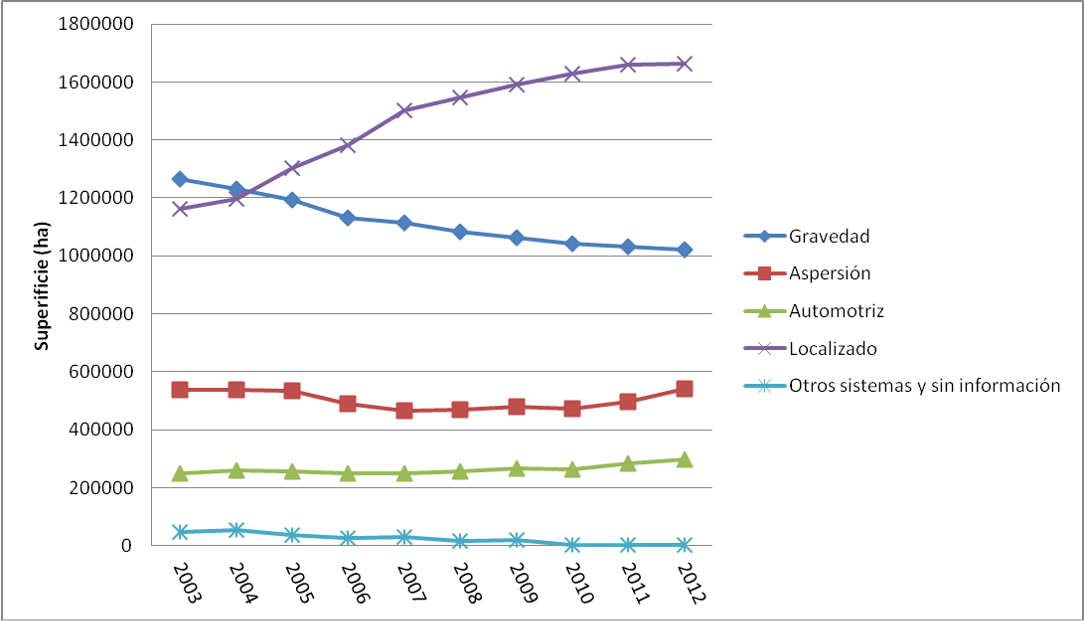
Through the irrigation policy of the Ministry of Agriculture, Fisheries and Food, successive action plans have been implemented in the field of irrigation in recent decades, based mainly on a series of investments in the creation of new irrigation infrastructures and in the modernization of existing irrigation systems, in order to make efficient and sustainable use of resources.
All actions must be previously declared of general interest by law, are subject to an environmental impact assessment and are carried out in coordination with the water management authority in Spain, the Ministry for Ecological Transition and the Demographic Challenge.
The Food and Agriculture Organization of the United Nations (FAO) defines food sovereignty as the right of peoples to define and control their food and food production systems at both the local and national levels, in an equitable, sovereign and environmentally respectful manner.
In the definitions and rights of the population, as contemplated in Spanish legislation, we find common points such as:
nutritious food,
culturally appropriate,
accessible,
produced in a sustainable, ecological and socially just way,
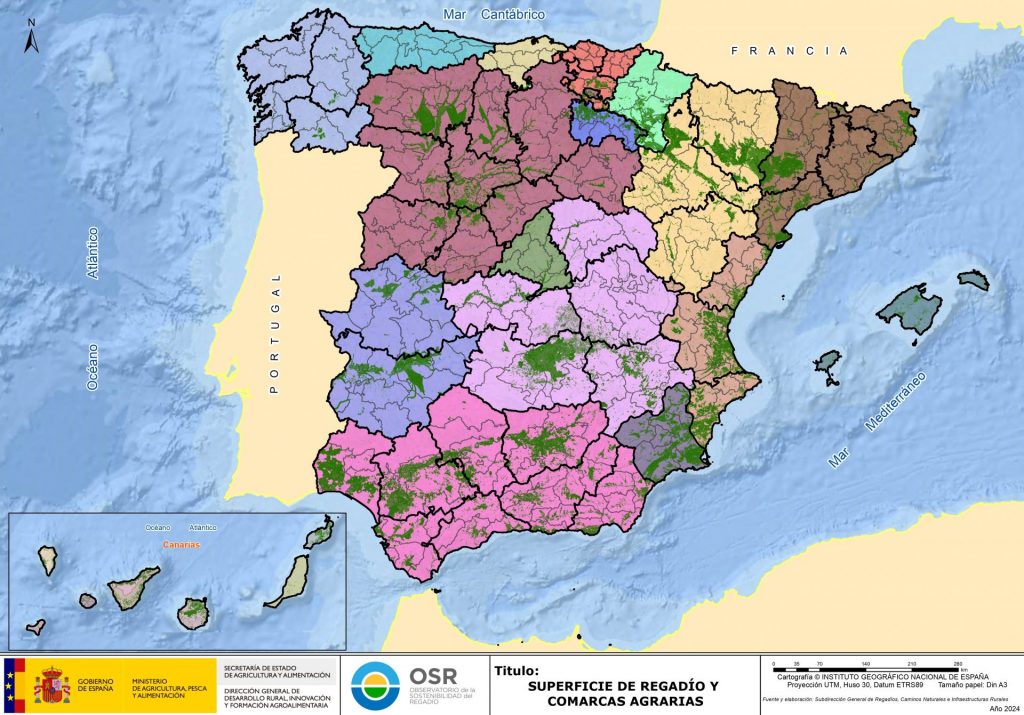
Agricultural Regions are intermediate spatial units between the province and the municipality, without legal-administrative personality, which have a uniform character from an agricultural point of view for planning.
The usefulness of this division has been evident, as in the application of measures of the Common Agricultural Policy (CAP) which in some cases were referenced to the productive regionalization indices associated with the different agricultural regions.
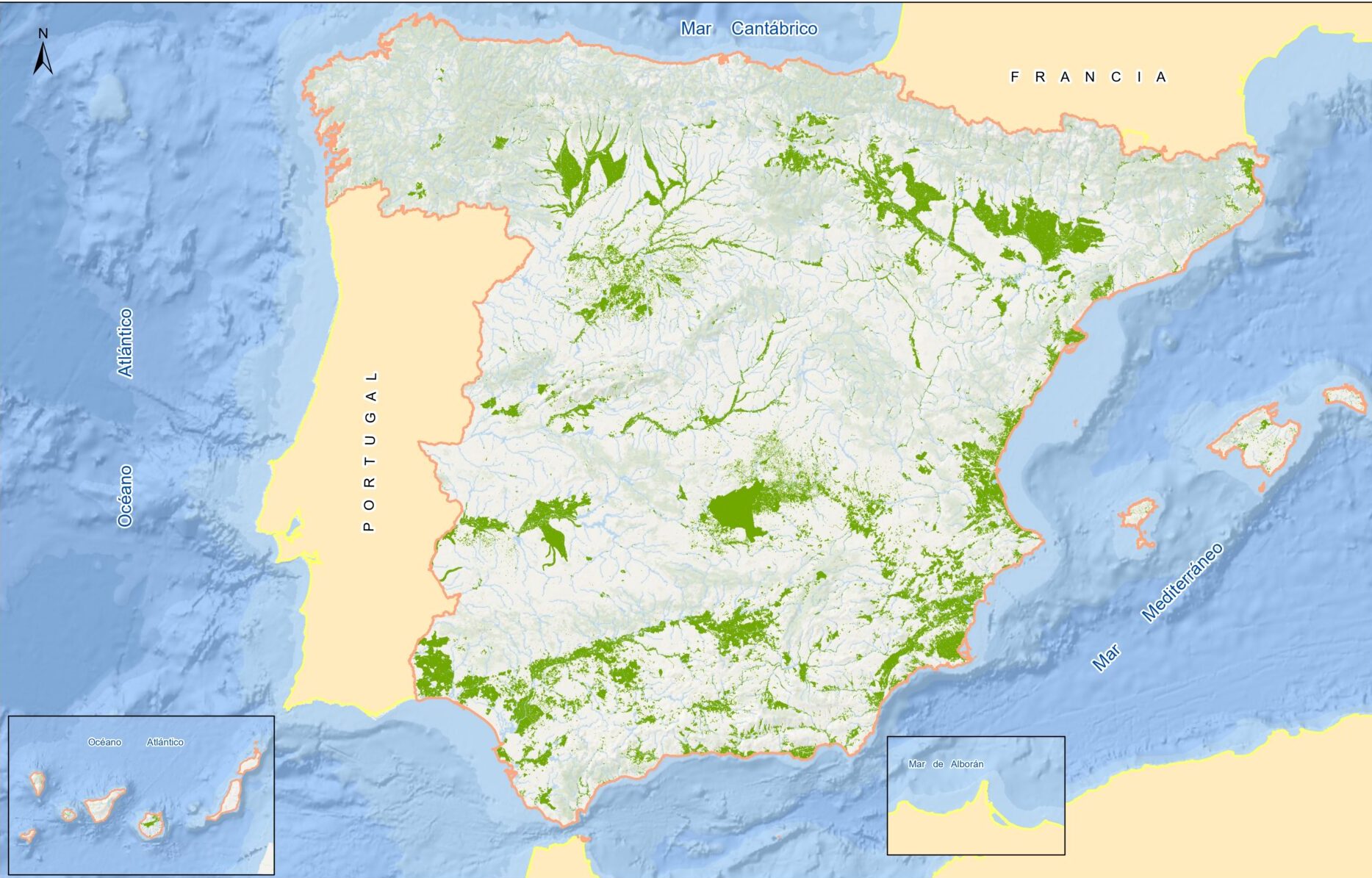
Maps of the different territorial realities of irrigation at the national level, in interaction with their social, economic and environmental characteristics.
General and specific reports on the state of irrigation, showing its evolution over time in the technical, economic, social and environmental fields for its sustainability.



 English (UK)
  Español
  Français
  Català
  Galego
  Euskara