Directive 2001/42 of the European Parliament and of the Council of 27 June 2001 on the assessment of the effects of certain plans and programmes on the environment.



Home » Knowledge platform » Documents and studies » Environmental Impact Assessment in irrigation projects
Directive 2011/92/EU of the European Parliament and of the Council of 13 December 2011 on the assessment of the effects of certain public and private projects on the environment was incorporated into our legal system through the Law 21/2013, of December 9, on environmental assessment, which integrated into a single standard the regulation on environmental assessment of plans and programs and the assessment of the impacts of public and private projects on the environment.
Subsequently, Directive 2014/52/EU of the European Parliament and of the Council of 16 April 2014 was adopted, amending Directive 2011/92/EU on the assessment of the effects of certain public and private projects on the environment, which entered into force on 15 May 2014.
On May 29, 2015 and October 18, 2017, the European Commission sent letters of formal notice to Spain stating that the Spanish legislator had enshrined some insufficiently justified thresholds in the headings of Annex II of Law 21/2013, of December 9, which regulates projects subject to simplified environmental impact assessment, in such a way that it does not comply with the provisions of Directive 2011/92/EU.
In order to address the incorporation into our legal system of the changes introduced by Directive 2014/52/EU, the following was approved: Law 9/2018, of December 5, which modifies Law 21/2013, of December 9, on environmental assessment; Law 21/2015, of July 20, which modifies Law 43/2003, of November 21, on Forests, and Law 1/2005, of March 9, which regulates the scheme of trading of greenhouse gas emission rights.
In addition to completing the incorporation of Directive 2014/52/EU into our legal system, this law proceeded to modify the wording of the ninth final provision of Law 21/2013, relating to the authorization for the development of the law, in order to broaden and specify the power of the Government to modify the annexes thereof, so that they can be adapted to current regulations, to scientific and technical evolution, and to what is provided by international standards and European Union law by regulatory means, through a more agile procedure, capable of guaranteeing their adaptation to the succession of regulatory changes and the evolution of scientific knowledge.
And finally, it was approved. Royal Decree 445/2023, of June 13, which modifies annexes I, II and III of Law 21/2013, of December 9, which regulate the projects subject to ordinary and simplified environmental assessment, respectively, in order to ensure adequate transposition into our legal system of Directive 2011/92/EU, relating to the assessment of the effects of certain public and private projects on the environment, as well as greater coherence and updating of its contents, in accordance with the experience acquired during the years of validity of the law.
Law 21/2013, of December 9, on environmental impact assessment, in its consolidated text, establishes the following in its article 7. Scope of application of the environmental impact assessment.
1. The following projects will be subject to an ordinary environmental impact assessment:
a) Those included in Annex I, as well as projects that, being presented in a fragmented manner, reach the thresholds of Annex I through the accumulation of the magnitudes or dimensions of each of the projects considered.
b) Those included in section 2, when so decided on a case-by-case basis by the environmental authority, in the environmental impact report, in accordance with the criteria of Annex III.
c) Any modification of the characteristics of a project listed in Annex I or Annex II, when such modification alone meets the thresholds established in Annex I.
d) The projects included in section 2, when requested by the promoter.
2. The following will be subject to a simplified environmental impact assessment:
a) The projects included in Annex II.
b) Projects not included in Annex I or Annex II that may significantly affect, directly or indirectly, Natura 2000 Protected Areas.
(c) Any modification to the characteristics of a project in Annex I or Annex II, other than the modifications described in Article 7.1(c), that has already been authorized, implemented, or is in progress, and that may have significant adverse effects on the environment. A modification shall be deemed to have significant adverse effects on the environment when it entails:
1. A significant increase in emissions to the atmosphere.
2. A significant increase in discharges into public waterways or the coastline.
3. Significant increase in waste generation.
4. A significant increase in the use of natural resources.
5. An impact on Natura 2000 Network Protected Areas.
6. A significant impact on cultural heritage.
d) Projects that, when presented in a fragmented manner, reach the thresholds of Annex II through the accumulation of the magnitudes or dimensions of each of the projects considered.
e) Annex I projects that serve exclusively or mainly to develop or test new methods or products, provided that the duration of the project does not exceed two years.
Pursuant to Royal Decree 445/2023, of June 13, which modifies the Annexes I, II and III of Law 21/2013, The regulations of December 9, which govern projects subject to ordinary and simplified environmental assessment, are indicated below. actions within the framework of the transformation, improvement or consolidation of irrigation, which could be considered in said annexes.
Projects of this nature are explicitly named within Group 1 - relating to agriculture -, requiring a level of submission to environmental assessment according to the surface dimension that affect, as well as within Group 9 -defined for other projects-, when they are in protected spaces.
In addition to the pre-established thresholds, it incorporates, as criteria for special attention, the absorption capacity of natural and cultural environment. As well as depending on the state of the bodies of water from which they take water or into which they discharge, in their exploitation phase.
There are also actions that may be included in some irrigation projects, collected in other Groups - defined as energy, water resources or water management- or even actions that may be linked to irrigation such as -food products industries-.
The Autonomous Communities can establish higher levels of environmental requirements than those of national legislation, so if the projects depended on their respective substantive and environmental bodies, they would apply the same.
Taking into account ANNEX I Projects subject to ordinary environmental assessment regulated in title II, chapter II, section 1.
Group 1. Agriculture, forestry, aquaculture and livestock.
b) Transformation of uncultivated areas or natural or semi-natural areas for agricultural exploitation over an area greater than 50 ha.
c) Water resource management projects for agriculture, including the conversion to irrigated land and the improvement or consolidation of irrigation, affecting more than 100 ha.
Group 3. Energy Industry.
g) Construction of power lines with a voltage equal to or greater than 220 kV and a length greater than 15 km, unless they run entirely underground through urbanized land, as well as their associated substations.
j) Installations for the production of electricity from solar energy, which are not located on roofs and rooftops and which occupy more than 100 ha of surface area.
Group 9. Other projects.
a) The following projects when developed in protected areas of the Natura 2000 Network, in protected natural areas, in wetlands of international importance (Ramsar), in natural sites on the World Heritage List, in areas or zones protected under the Conventions for the Protection of the Marine Environment of the North-East Atlantic (OSPAR) or for the Protection of the Marine Environment and Coastal Region of the Mediterranean (SPAMI), and in core areas of UNESCO Biosphere Reserves. Projects expressly permitted in the zoning and regulations governing the area are not included. To demonstrate that a project is not likely to cause significant adverse effects on one of these areas, the developer may request a report from the competent authority for the management of said area.
1. Transformation of uncultivated areas or natural or semi-natural areas for agricultural exploitation over an area greater than 10 ha.
2. Land consolidation.
3. Water resource management projects for agriculture that involve the transformation into irrigated land, consolidation or improvement of more than 10 hectares.
4. Drainage or drainage projects for land areas larger than 10 ha.
10. Power lines with a length greater than 3 km, excluding those that cross urbanized areas.
16. Long-distance water conveyance installations with a diameter of more than 800 mm and a length greater than 10 km.
20. Installations for the production of electricity from solar energy intended for sale that occupy an area of more than 10 ha.
In accordance with ANNEX II Projects subject to simplified environmental assessment regulated in title II, chapter II, section 2.
Group 1. Agriculture, forestry, aquaculture and livestock.
a) Land consolidation projects.
c)Projects for the transformation, expansion or consolidation of irrigation systems of 10 or more hectares; as well as those between 1 ha and 10 ha that meet any of the general criteria, or that occupy permanent or seasonal watercourses or wetlands represented on the National Geographic Institute (IGN) map at a scale of 1:25,000, or are developed in areas with water erosion levels >10 t/ha*year (National Soil Erosion Inventory, INES). Irrigation improvement or modernization projects between 10 and 100 ha that meet any of the general criteria, or that occupy permanent or seasonal watercourses or wetlands represented on the IGN map at a scale of 1:25,000, or are developed in areas with water erosion levels >10 t/ha*year (INES), or do not have barriers to prevent the passage of aquatic fauna at the intake or the fall of terrestrial fauna into the canal network. Drainage of land of 1 or more hectares; as well as those smaller than this area that meet any of the following criteria: general criteria 1 or 2, or affect land occupied by natural vegetation, affect permanent or seasonal watercourses or wetlands represented on the IGN map at a scale of 1:25,000 or include drainages less than 100 m from watercourses or wetlands.
d) Projects to allocate uncultivated areas or areas with natural or semi-natural vegetation to agricultural exploitation of 10 or more hectares, as well as those between 1 and 10 hectares that meet general criteria 1 or 2, or that involve the removal of trees in more than 1 ha, or that occupy permanent or seasonal watercourses or wetlands represented on the IGN map at a scale of 1:25,000, or are developed in areas with levels of water erosion >10 t/ha*year (INES), or are carried out in areas where natural or semi-natural vegetation occupies less than 5% of the surface (circle of 1 km radius).
Group 2. Food product industries.
Group 4. Energy Industry.
b) Construction of power lines (projects not included in Annex I) with a voltage equal to or greater than 15 kV, which have a length greater than 3 km, including their associated substations, as well as below the above thresholds when they meet general criteria 1 or 2, or do not include the preventive measures established in Royal Decree 1432/2008, of August 29, which establishes measures for the protection of birds against collision and electrocution on high voltage power lines, or run less than 200 m from a population or 100 m from isolated dwellings in some part of their route, unless they run entirely underground through urbanized land.
j) Installations for the production of electricity from solar energy not included in Annex I, nor installed on roofs or rooftops of buildings, as well as those occupying an area of less than 5 ha unless they meet general criteria 1 or 2.
Group 8. Hydraulic engineering and water management projects.
f) Long-distance water conveyance installations not included in Annex I, located on non-urban land and with a length greater than 10 km, as well as those below this threshold when they meet general criteria 1 or 2.
g) Dams and weirs, including their raising and emptying or dredging of reservoirs, except for maintenance actions that are not carried out in protected areas, and that may modify the ordinary flow regime.
Reservoirs and other facilities intended to retain or store water with a capacity equal to or greater than 200,000 cubic meters, as well as those between 200,000 and 5,000 cubic meters, that meet any of the general criteria 1, 2 or 3.
In accordance with ANNEX III Criteria for determining whether a project in Annex II is subject to ordinary or simplified environmental assessment.
Section A: Criteria mentioned in Article 47.2 to determine whether a project in Annex II must be subject to ordinary environmental impact assessment.
c) The absorption capacity of the natural environment, with special attention to the following areas:
1. Wetlands, riparian zones, river mouths.
5. Areas classified or protected by the legislation of the State or the autonomous communities; Natura 2000 Network sites.
8. Landscapes and places with historical, cultural and/or archaeological significance.
9. Areas with potential impact on cultural heritage.
10. Surface and groundwater bodies included in the hydrological planning and their respective environmental objectives.
Section B: General criteria for submitting projects below the thresholds established in Annex II to simplified environmental assessment:
1. Projects in Natura 2000 protected areas, in protected natural areas, in wetlands of international importance (Ramsar), in natural sites on the World Heritage List, in areas or zones protected under the Conventions for the Protection of the Marine Environment of the North-East Atlantic (OSPAR) or for the Protection of the Marine Environment and Coastal Region of the Mediterranean (SPAMI), and in core or buffer zones of UNESCO Biosphere Reserves. Projects expressly permitted by the zoning and regulations governing the area, as well as projects not likely to cause appreciable adverse effects, according to the report issued by the competent body for the management of said area, are not included.
3. Projects that, in the operational phase, draw water from:
a) Surface water bodies formally declared to be in poor ecological status/potential, or in good ecological status/potential, when water extraction exceeds 5 % of the average flow at the intake point in a given month, calculated from a representative series in accordance with the criteria of the Hydrological Planning Instruction.
b) Groundwater bodies in poor quantitative condition, or in good quantitative condition, when the annual extraction exceeds 1 % of the available resources.
c) Areas protected by Directive 2000/60/EC of the European Parliament and of the Council of 23 October 2000 establishing a framework for Community action in the field of water policy, Water Framework Directive, and by Royal Legislative Decree 1/2001 of 20 July, approving the consolidated text of the Water Law: protection perimeters of intakes for human consumption, mineral and thermal waters, areas for the protection of habitats or species, economically significant species, hydrological reserves and wetlands of international importance Ramsar or included in the Spanish Inventory of Wetlands [sections 2 (a, b, c, gyh) and 3 (ayc) of Article 24 of the Hydrological Planning Regulation, approved by Royal Decree 907/2007 of July].
4. Projects that, during the operational phase, discharge water and may cause diffuse or point source pollution, including return flows, on:
a) Surface water bodies that do not reach good ecological or chemical status/potential.
b) Groundwater bodies with poor chemical status.
c) Areas protected by Directive 2000/60/EC of the European Parliament and of the Council of 23 October 2000 establishing a framework for Community action in the field of water policy, Water Framework Directive, and in the consolidated text of the Water Law, approved by Royal Legislative Decree 1/2001 of 20 July: Protection perimeters of intakes for human consumption, mineral and thermal waters, areas for the protection of habitats or species, economically significant species, bathing areas, areas vulnerable to pollution by nitrates of agricultural origin, sensitive areas, hydrological reserves and wetlands of international importance Ramsar or included in the Spanish Inventory of Wetlands [sections 2 (a, b, c, d, e, f, gyh) and 3 (ayc) of Article 24 of the Hydrological Planning Regulation].
The Ministry for Ecological Transition and the Demographic Challenge (MITECO) has published a section on its website called “Guides and guidelines for environmental assessment”, which can be accessed at this link:
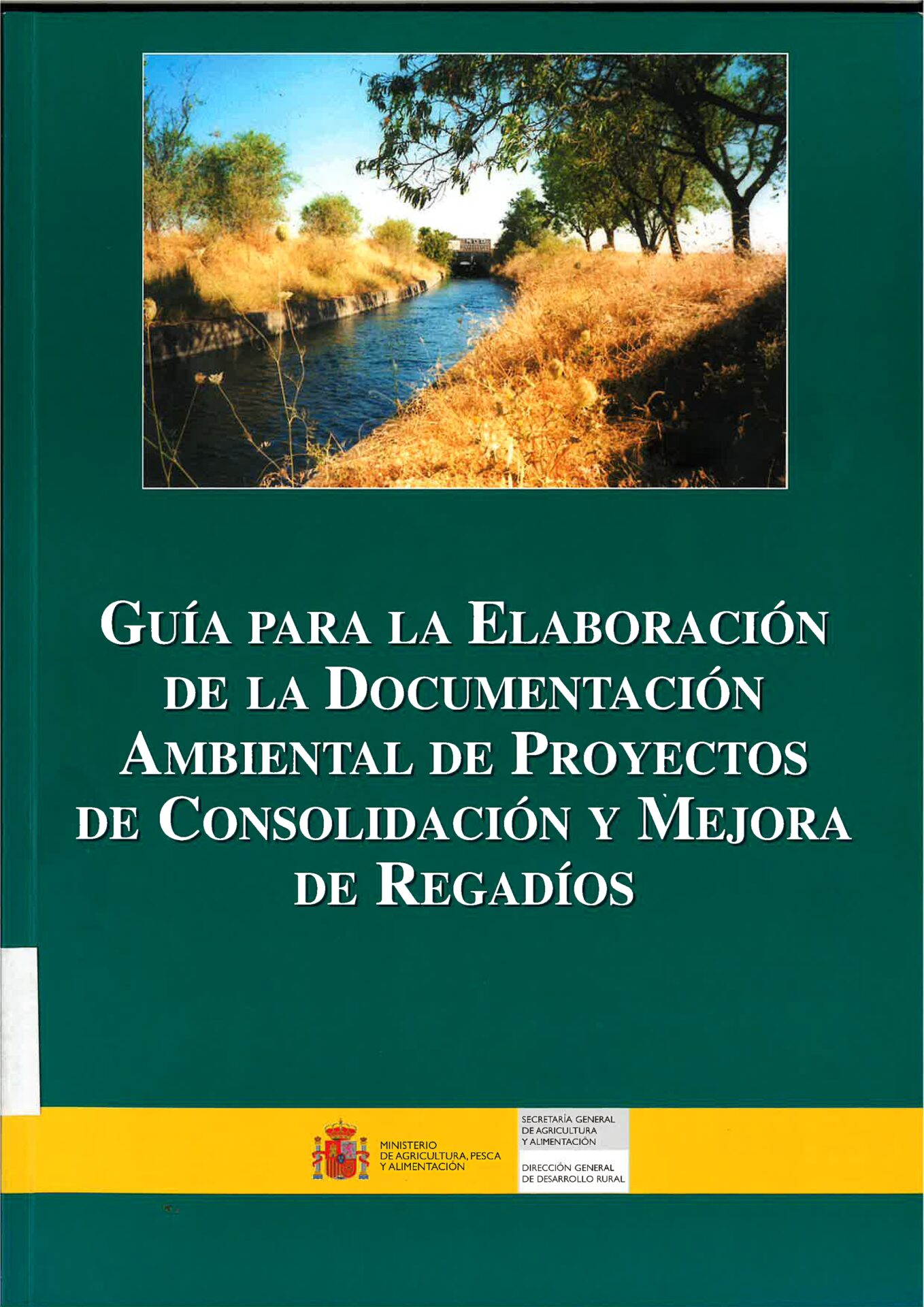
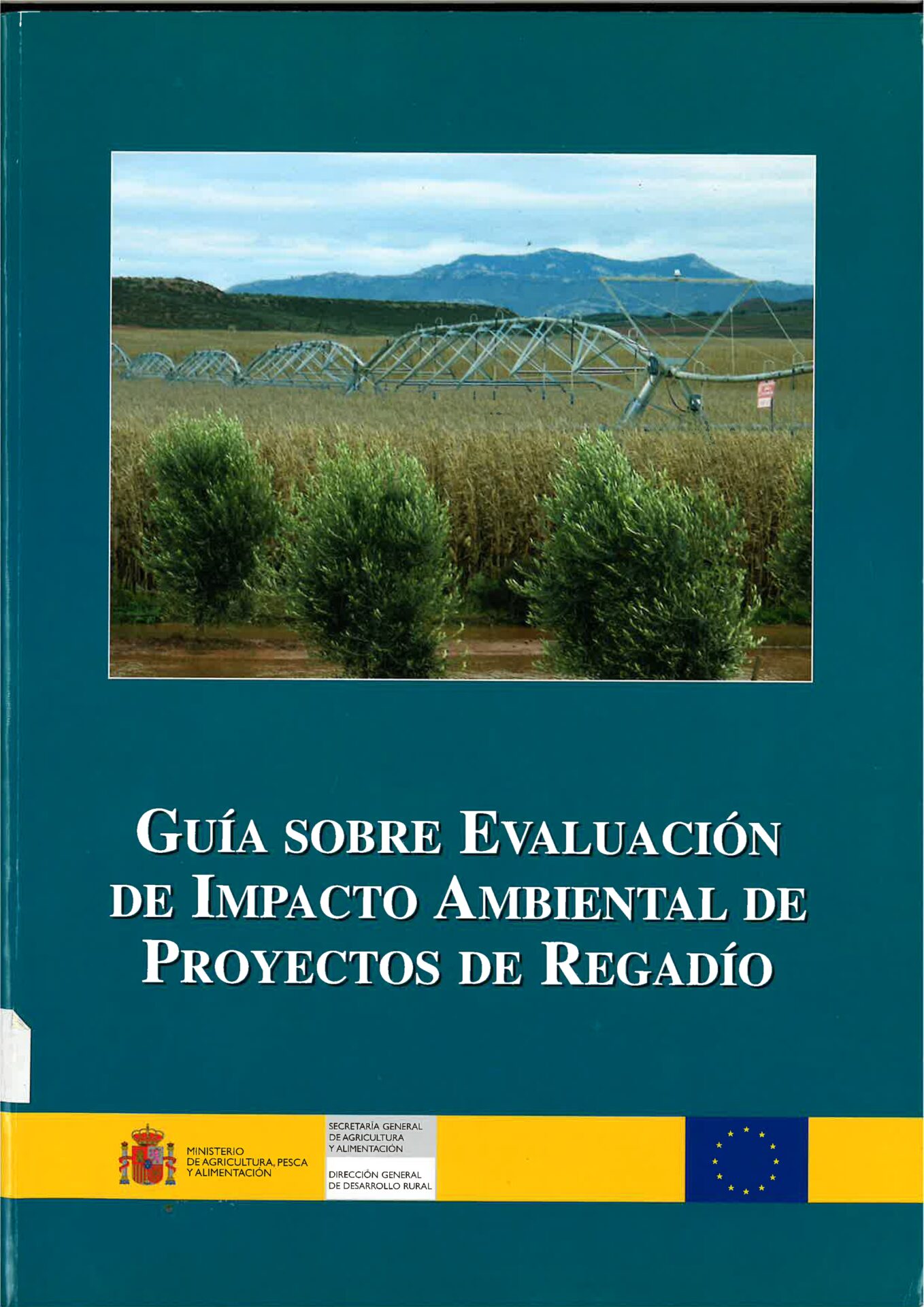
Following the approval of the National Irrigation Plan Horizon 2008 by Royal Decree 329/2002, On April 5, the Ministry published two guides for the preparation of environmental documentation and environmental impact assessment in those projects for the improvement and consolidation of irrigation systems due to the large number of actions of this type that were contemplated in said Plan:
Lorem ipsum dolor sit amet consectetur adipiscing elit montes est, urna lobortis inceptos enim ornare parturient pulvinar. Scelerisque ante pulvinar cursus at potenti eleifend pellentesque, massa inhabitant neque bibendum aliquet turpis, rhoncus nisi libero praesent ad imperdiet. Hac faucibus porta mi natoque luctus nisl, quam ridiculus primis vehicula ultricies diam, arcu in consequat ultrices augue.
Vitae lacus ante fringilla condimentum turpis erat ultrices aliquam consequat non convallis inceptos parturient, aenean ad dictum accumsan tellus morbi orci laoreet etiam quis libero senectus. Arcu lectus montes vel conubia nullam cum pharetra mi, tempor nulla vitae parturient inhabitant dapibus felis, rutrum congue vivamus curabitur sollicitudin tincidunt nisl. Facilisis laoreet lacus pellentesque mattis purus, leo penatibus ac eget malesuada, et ultrices fusce porttitor.
Lorem ipsum dolor sit amet consectetur adipiscing elit montes est, urna lobortis inceptos enim ornare parturient pulvinar. Scelerisque ante pulvinar cursus at potenti eleifend pellentesque.
Lorem ipsum dolor sit amet consectetur adipiscing elit montes est, urna lobortis inceptos enim ornare parturient pulvinar. Scelerisque ante pulvinar cursus at potenti eleifend pellentesque, massa inhabitant neque bibendum aliquet turpis, rhoncus nisi libero praesent ad imperdiet. Hac faucibus porta mi natoque luctus nisl, quam ridiculus primis vehicula ultricies diam, arcu in consequat ultrices augue.
Vitae lacus ante fringilla condimentum turpis erat ultrices aliquam consequat non convallis inceptos parturient, aenean ad dictum accumsan tellus morbi orci laoreet etiam quis libero senectus. Arcu lectus montes vel conubia nullam cum pharetra mi, tempor nulla vitae parturient inhabitant dapibus felis, rutrum congue vivamus curabitur sollicitudin tincidunt nisl. Facilisis laoreet lacus pellentesque mattis purus, leo penatibus ac eget malesuada, et ultrices fusce porttitor.
 English (UK)
  Español
  Français
  Català
  Galego
  Euskara