Home » irrigation vision » Irrigation heritage
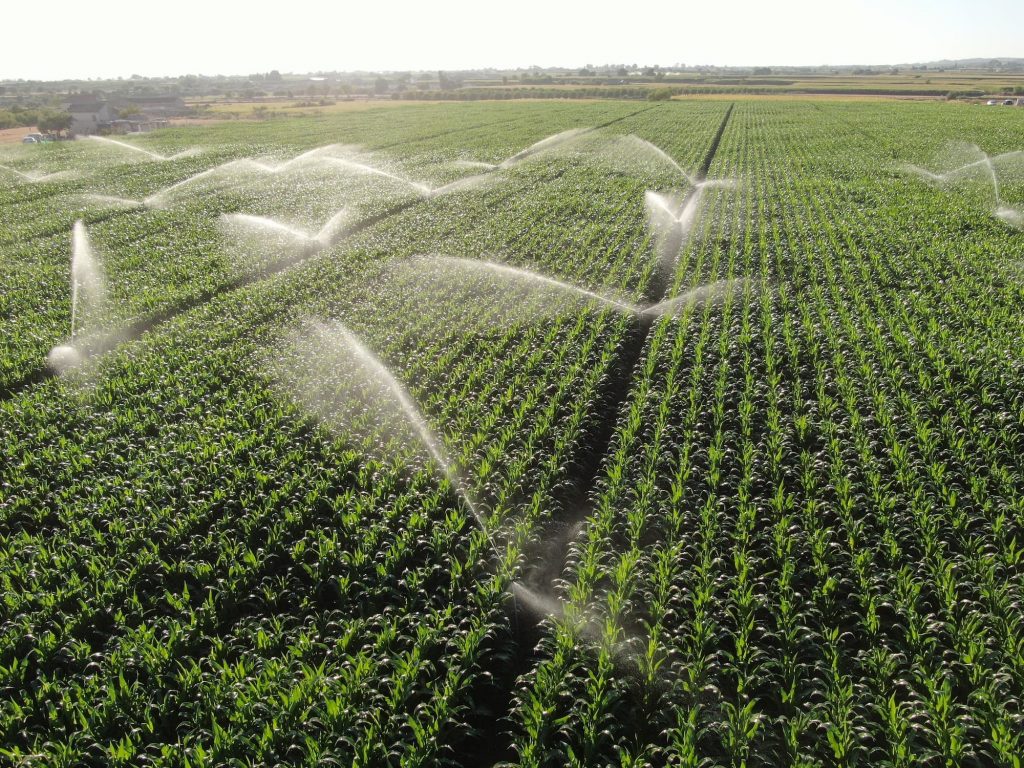
According to Article 82 of the Water Law, a community of irrigators is a public law corporation, affiliated with the river basin organizations, which in Spain correspond to the hydrographic confederations, and are responsible for organizing the collective use of public surface and underground water (aquifers) that are common to them.
The organization of Irrigation Communities is not clearly defined in our historical law, as they were associations governed by systems and rules specific to the Romans and Arabs, such as brotherhoods, unions, boards, guilds, etc., with an organization that allowed for the administration and distribution of water for crop irrigation. The rules for water distribution were based on customary law, on custom, passed down verbally through generations and containing highly contrasting experiences due to their practical applications. Over time, these customary practices were reflected in written ordinances, which today constitute invaluable historical value.
The development of irrigation in Spain was strongly influenced by the physical environment, perhaps more so than any other human phenomenon. The earliest period in the history of irrigation in Spain dates back to Prehistory and Antiquity. This beginning is very difficult to pinpoint and varies from one river basin to another.
There is historical evidence to support the claim that the distribution of water in common, and through irrigation ditches, dates back to times long before the Muslims, and its Christian foundation can be proven.
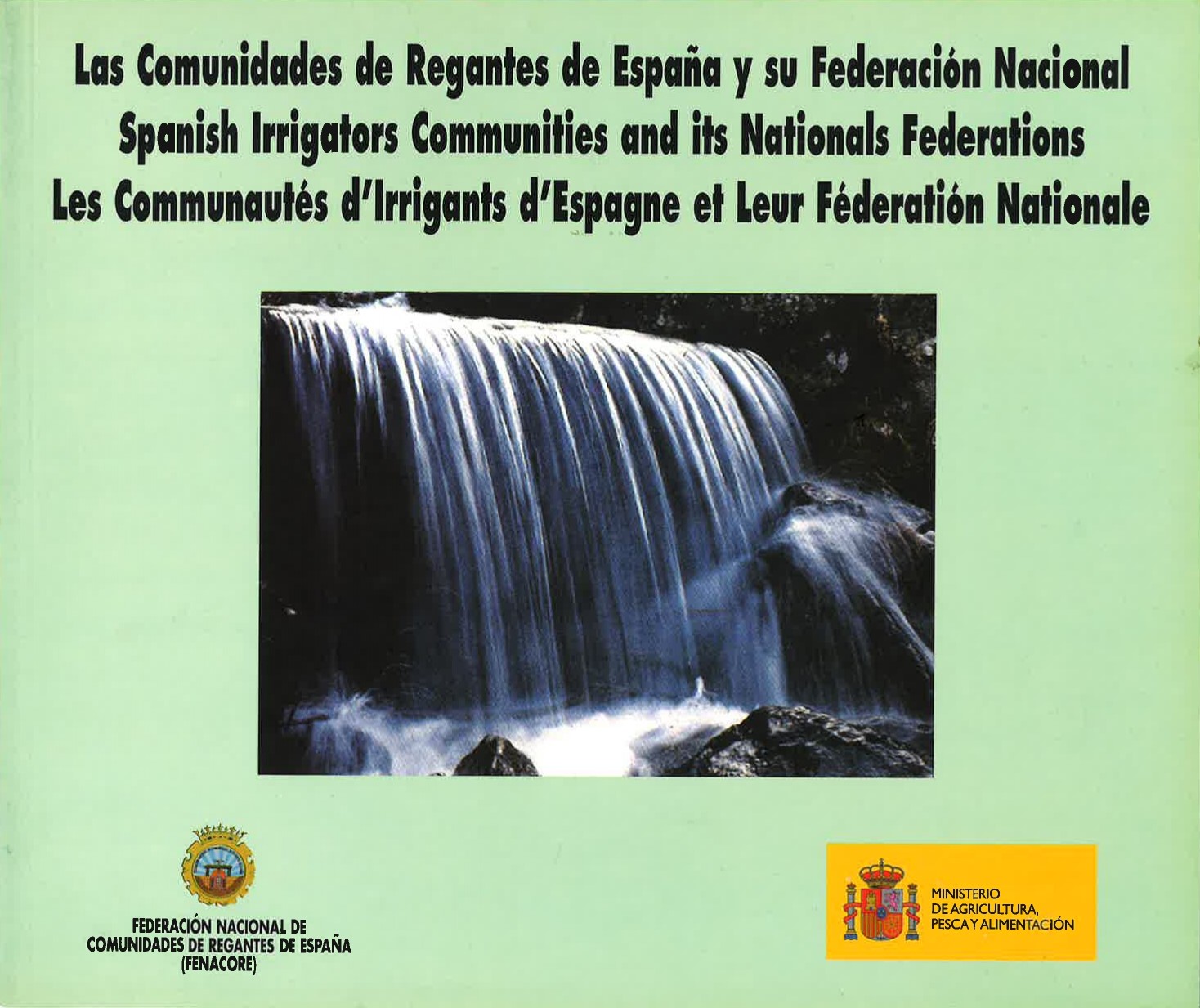
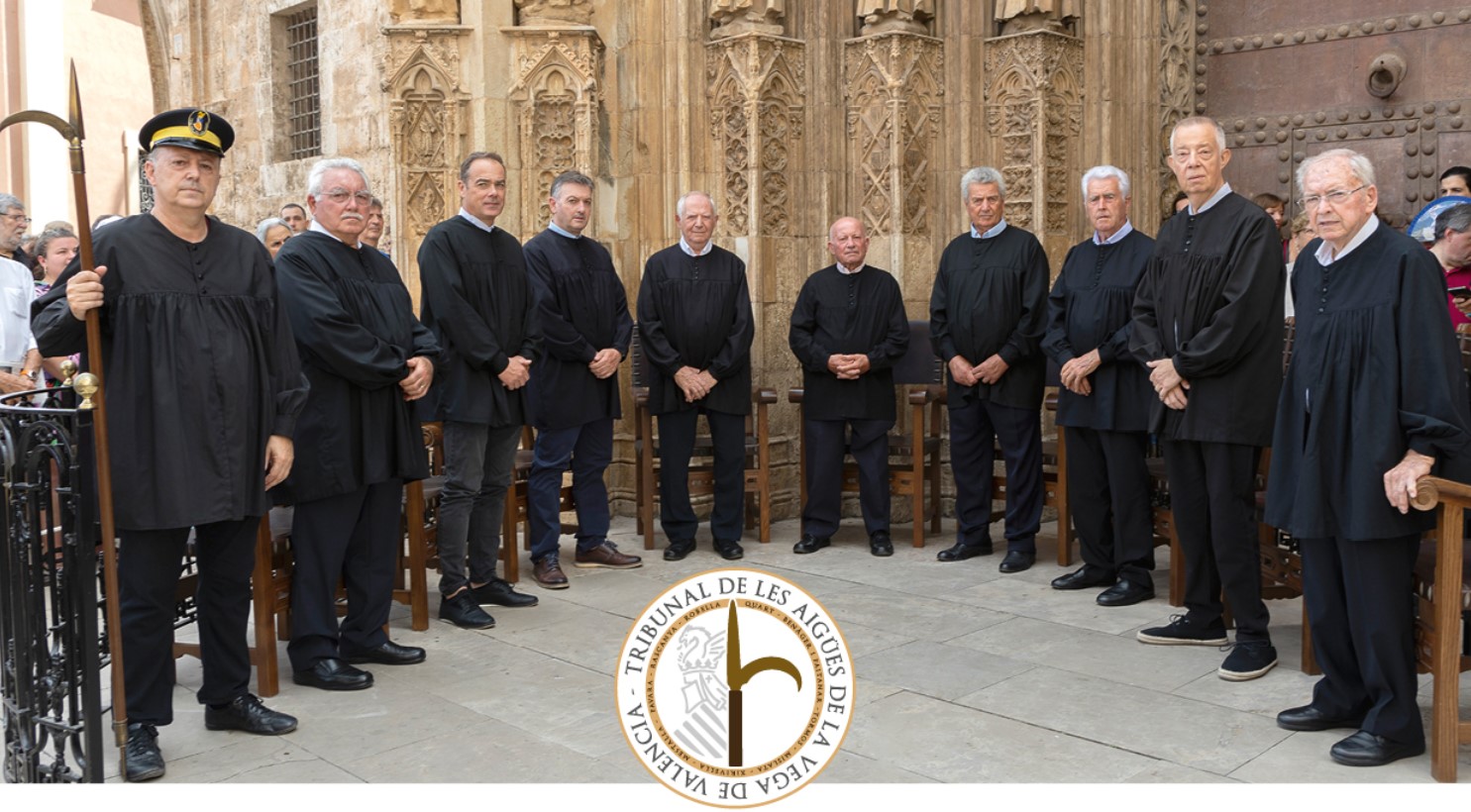
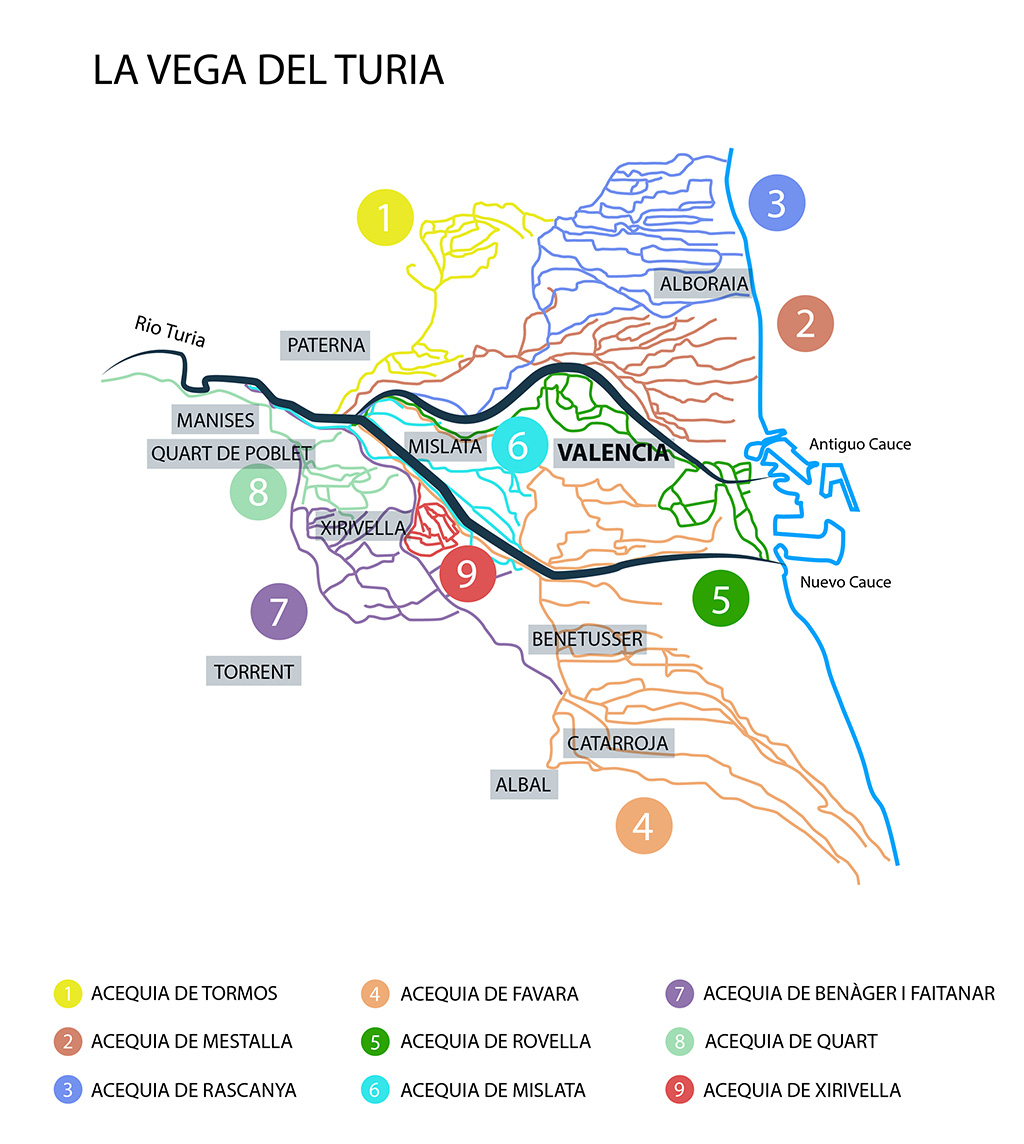
Some of the first communities to join the National Federation of Irrigation Communities of Spain were those that make up the Water Tribunal of the Vega de Valencia, which is over a thousand years old and even served as inspiration for the legislators of the Water Laws of 1866 and 1879, who were able to undeniably shape the regime that is known of the Irrigation Communities of Spain, with influence even in various countries in America.
Irrigation Communities are institutions with a long historical tradition of proper water distribution and irrigation organization, and are deeply rooted in the popular consciousness.
Food in Spain is an essential element of our cultural identity, a source of economic wealth, and a pillar of social well-being. Spain's geography, along with its unique climatic conditions, fosters the production of diverse and varied foods that shape our inland and coastal landscape.
Furthermore, the Spanish agri-food and fishing sector is a key economic driver that generates employment, promotes the development of rural and coastal areas, and contributes significantly to exports.
Registered in 2009 (4.COM) on the Representative List of the Intangible Cultural Heritage of Humanity
The irrigation courts of the Spanish Mediterranean are customary legal institutions for water management whose origins date back to the time of Al-Andalus (9th-13th centuries).
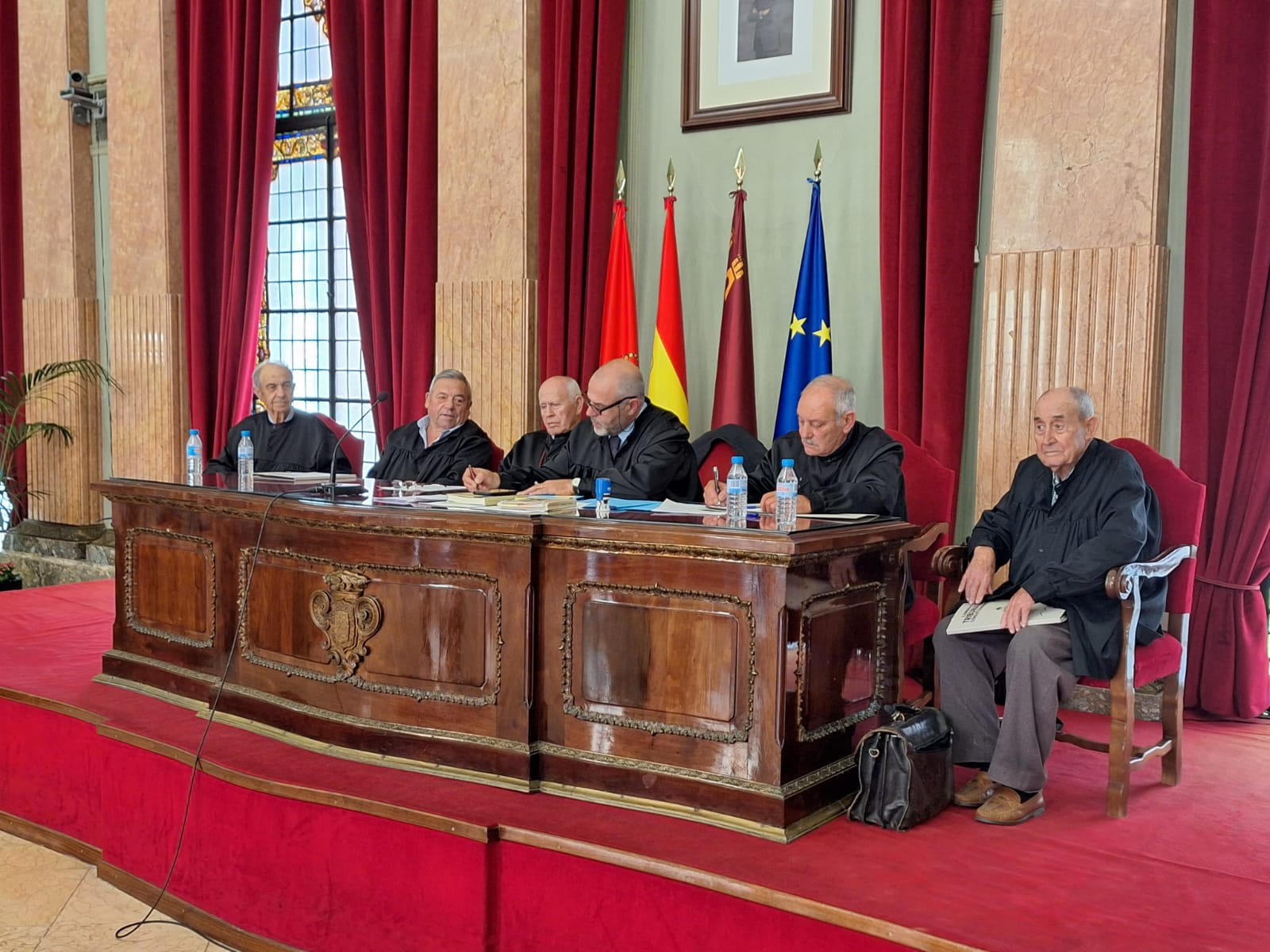
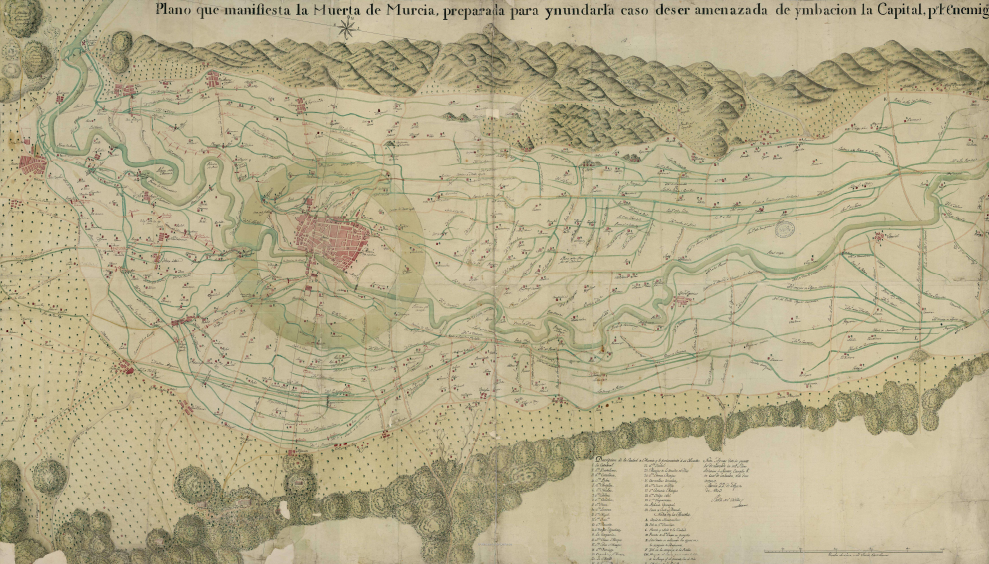
The two most important, the Council of Good Men of the Huerta de Murcia and the Water Tribunal of the Huerta de Valencia, are recognized by Spanish law.
The members of these two courts, who enjoy great authority and respect, are democratically elected and resolve disputes through an oral procedure characterized by speed, transparency, and impartiality.
Comprised of seven members representing diverse geographical areas, the Council of Good Men has jurisdiction over an irrigation community with 23,313 members. The Water Tribunal is composed of eight elected trustees representing nine irrigation communities with a total of 11,691 members.
In addition to their legal functions, these courts play an important role as visible symbols of their respective communities, as evidenced by the rituals observed when issuing their rulings and their frequent presence in local iconography.
They also contribute to the cohesion of irrigation communities, ensure the synergy of a series of trades (guards, inspectors, pruners, etc.), orally transmit knowledge derived from centuries-old cultural exchanges, and possess their own specialized vocabulary interspersed with words of Arabic origin.
In short, irrigation courts are not only ancestral custodians of local and regional identity, but are also of great importance to local populations.

Inscribed in 2013 (8.COM) on the Representative List of the Intangible Cultural Heritage of Humanity of Spain, Greece, Italy, Portugal, Croatia, Cyprus and Morocco.
Source: https://ich.unesco.org/es/RL/la-dieta-mediterranea-00884
The Mediterranean diet encompasses a set of knowledge, practical skills, rituals, traditions, and symbols related to agricultural crops and harvests, fishing, and animal husbandry, as well as ways of preserving, processing, cooking, sharing, and consuming food. The act of eating together is one of the foundations of the cultural identity and continuity of the communities of the Mediterranean basin. It is a moment of social exchange and communication, and also of affirmation and renewal of the ties that shape the identity of the family, group, or community. This element of intangible cultural heritage highlights the values of hospitality, good neighborliness, intercultural dialogue, and creativity, as well as a way of life guided by respect for diversity. Furthermore, it plays an essential role as a factor of social cohesion in cultural spaces, festivals, and celebrations, bringing together people of all ages, conditions, and social classes. It also encompasses areas such as crafts and the manufacture of containers for transporting, preserving, and consuming food, such as ceramic plates and glasses. Women play a fundamental role in transmitting skills and knowledge related to the Mediterranean diet, safeguarding culinary techniques, respecting seasonal rhythms, observing calendar festivals, and transmitting the values of this element of cultural heritage to new generations. Local food markets also play a fundamental role as cultural spaces and places for transmitting the Mediterranean diet, where the daily practice of exchange fosters harmony and mutual respect.
Registered in 2009 (4.COM) on the Representative List of the Intangible Cultural Heritage of Humanity
The irrigation courts of the Spanish Mediterranean are customary legal institutions for water management whose origins date back to the time of Al-Andalus (9th-13th centuries).
The two most important, the Council of Good Men of the Huerta de Murcia and the Water Tribunal of the Huerta de Valencia, are recognized by Spanish law.
The members of these two courts, who enjoy great authority and respect, are democratically elected and resolve disputes through an oral procedure characterized by speed, transparency, and impartiality.
Comprised of seven members representing diverse geographical areas, the Council of Good Men has jurisdiction over an irrigation community with 23,313 members. The Water Tribunal is composed of eight elected trustees representing nine irrigation communities with a total of 11,691 members.
In addition to their legal functions, these courts play an important role as visible symbols of their respective communities, as evidenced by the rituals observed when issuing their rulings and their frequent presence in local iconography.
They also contribute to the cohesion of irrigation communities, ensure the synergy of a series of trades (guards, inspectors, pruners, etc.), orally transmit knowledge derived from centuries-old cultural exchanges, and possess their own specialized vocabulary interspersed with words of Arabic origin.
In short, irrigation courts are not only ancestral custodians of local and regional identity, but are also of great importance to local populations.

Lorem ipsum dolor sit amet consectetur adipiscing elit montes est, urna lobortis inceptos enim ornare parturient pulvinar. Scelerisque ante pulvinar cursus at potenti eleifend pellentesque, massa inhabitant neque bibendum aliquet turpis, rhoncus nisi libero praesent ad imperdiet. Hac faucibus porta mi natoque luctus nisl, quam ridiculus primis vehicula ultricies diam, arcu in consequat ultrices augue.
Vitae lacus ante fringilla condimentum turpis erat ultrices aliquam consequat non convallis inceptos parturient, aenean ad dictum accumsan tellus morbi orci laoreet etiam quis libero senectus. Arcu lectus montes vel conubia nullam cum pharetra mi, tempor nulla vitae parturient inhabitant dapibus felis, rutrum congue vivamus curabitur sollicitudin tincidunt nisl. Facilisis laoreet lacus pellentesque mattis purus, leo penatibus ac eget malesuada, et ultrices fusce porttitor.
Lorem ipsum dolor sit amet consectetur adipiscing elit montes est, urna lobortis inceptos enim ornare parturient pulvinar. Scelerisque ante pulvinar cursus at potenti eleifend pellentesque.
Lorem ipsum dolor sit amet consectetur adipiscing elit montes est, urna lobortis inceptos enim ornare parturient pulvinar. Scelerisque ante pulvinar cursus at potenti eleifend pellentesque, massa inhabitant neque bibendum aliquet turpis, rhoncus nisi libero praesent ad imperdiet. Hac faucibus porta mi natoque luctus nisl, quam ridiculus primis vehicula ultricies diam, arcu in consequat ultrices augue.
Vitae lacus ante fringilla condimentum turpis erat ultrices aliquam consequat non convallis inceptos parturient, aenean ad dictum accumsan tellus morbi orci laoreet etiam quis libero senectus. Arcu lectus montes vel conubia nullam cum pharetra mi, tempor nulla vitae parturient inhabitant dapibus felis, rutrum congue vivamus curabitur sollicitudin tincidunt nisl. Facilisis laoreet lacus pellentesque mattis purus, leo penatibus ac eget malesuada, et ultrices fusce porttitor.